 Seville Food Tours
Best Time to Visit Seville for Food
The best time to visit Seville for food is spring or autumn: April and May, October and November, when the terraces are open and the walking is a pleasure. This guide runs the eating year month by month, with the temperatures that decide whether a walking tour is a joy or an ordeal, and the two festival weeks that change everything.
Quick answer The two best months, the two to plan around, and what each season puts on the plate
The best months to eat in Seville are April, May, October and November: warm enough for terraces, cool enough to walk between bars, and either side of the summer when the city averages 36.4 C and small kitchens close for August holidays. The food moves with the calendar: torrijas and pestinos through Semana Santa, fried fish and rebujito at the Feria, cold soups all summer, mushrooms and oxtail in autumn, bitter oranges and stews in winter. Two fixed weeks reshape everything: Semana Santa runs 21-28 March 2027 and the Feria de Abril 13-18 April 2027.
Key takeaways
- Best for a walking food tour: March to May and October to November
- July and August average 36.4 C: book a morning tour or an indoor tasting
- August is the slowest month: many family kitchens close for holidays
- Semana Santa 21-28 March 2027; Feria de Abril 13-18 April 2027: book early or avoid
- Winter is underrated: oranges, stews, and no queue anywhere. See every Seville food tour compared
The Eating Year, Season by Season
Spring: the two weeks that own the calendar
Semana Santa (21-28 March 2027) fills the centre with processions that close streets for hours at a time, and puts torrijas, bread soaked in milk and egg, fried, dusted with sugar and cinnamon, in every pastelería, alongside pestinos, the anise-and-sesame fritters glazed in honey. Bars stay open late but moving between them is a matter of luck and patience.
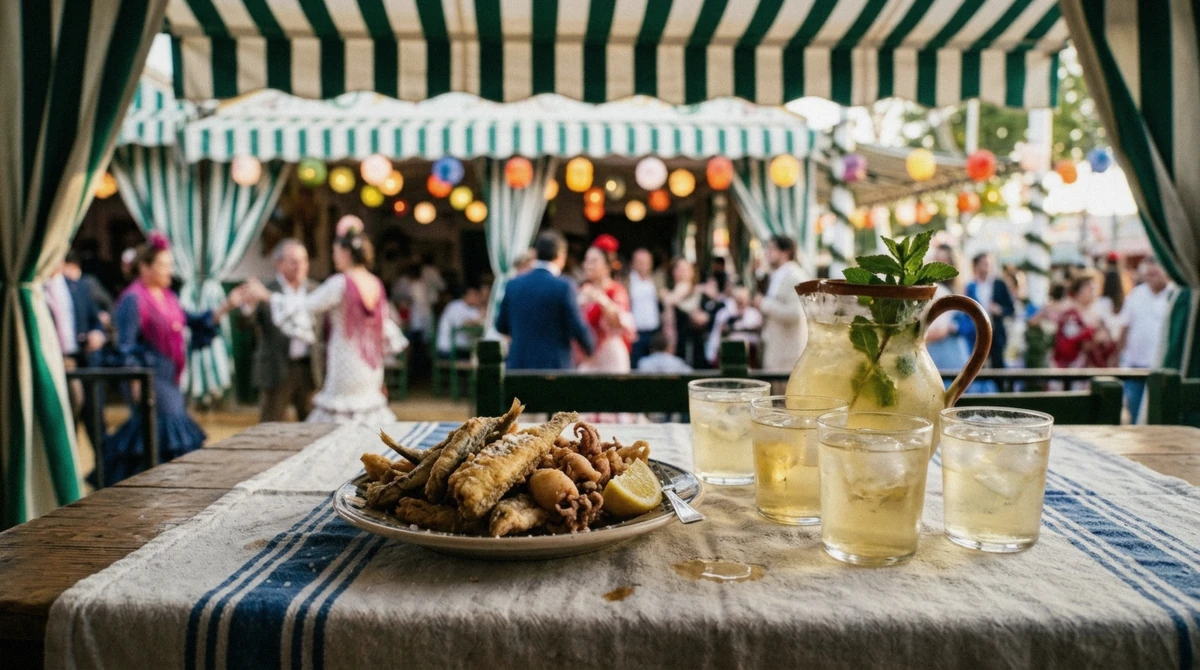
Feria de Abril (13-18 April 2027) is the opposite: the city decamps to a fairground across the river for a week of pescaito frito and rebujito, manzanilla cut with lemon-lime soda and served by the jug. Most casetas are private, which visitors discover too late. Either week is extraordinary to witness and a poor week to be casual about a booking: hotels double, tours sell out, and routes get rerouted.
Summer: cold soups and closed kitchens
June through September averages above 32 C, and July and August average 36.4 C on the 1991-2020 normals. The food adapts, salmorejo and gazpacho are on every counter, tinto de verano replaces wine, and dinner slides even later than usual, 22:00 is normal because it is finally bearable outside.
What travellers miss is that August is the city's own holiday month, when a good number of family-run bars simply close for two or three weeks. Combine that with the heat and August is the weakest month to plan a food trip around. If you are here anyway, take a morning or an indoor booking: the sherry tasting is seated and air-conditioned, and the morning market tour is finished before the worst of the day.
Autumn and winter: the food traveller's season
October and November are the sweet spot: 27 C and 21 C respectively, terraces still open, no crowds, and the kitchens back from holiday. Autumn brings setas (wild mushrooms) and heavier plates: cola de toro, oxtail stewed for hours, and carrillada in dark gravy.
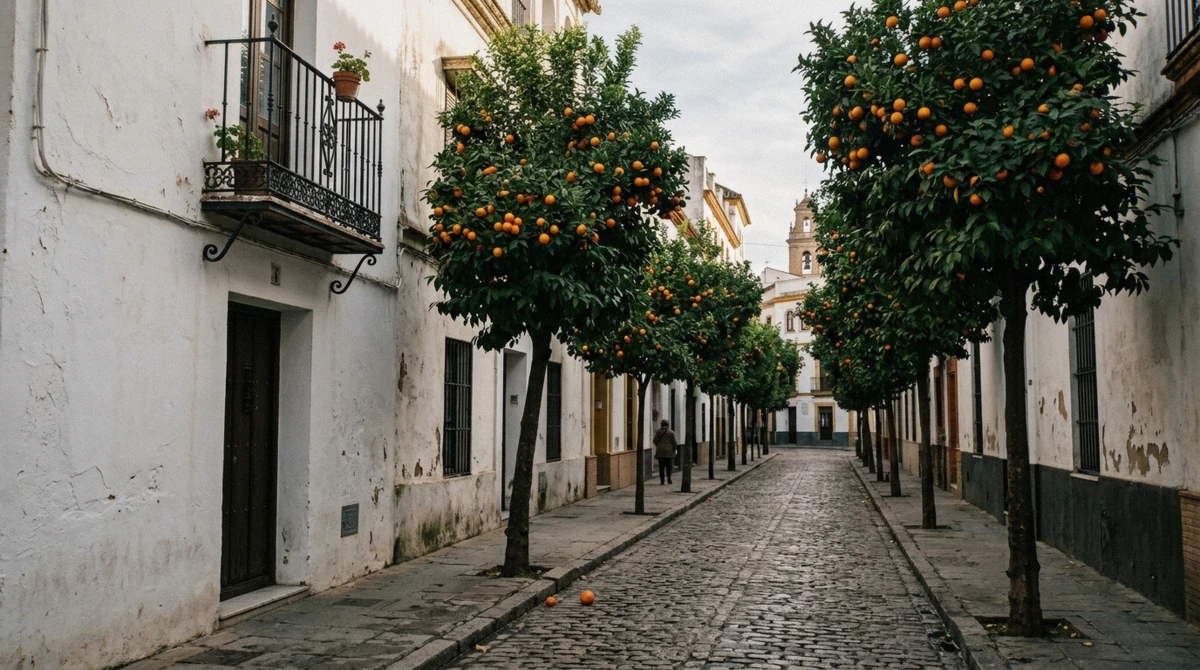
Winter is genuinely underrated. December is the wettest month at about 100 mm, but daytime highs still sit at 17 C, the bitter orange trees ripen from late November and turn the whole centre orange, and puchero, the stew whose leftovers become pringa, is at its best. Churros with hot chocolate makes sense in December in a way it does not in July, which is why the food tour with a local swaps in ice cream during the summer months.
Month by Month, With the Numbers
Temperature, rain and what it means for eating
Average daytime highs are the 1991-2020 normals for Seville. The right-hand column is the practical consequence for a walking food tour.
| Months | Average high | Rain | What it means |
|---|---|---|---|
| December-February | 17-19 C | 65-100 mm | Wettest, quietest, cheapest. Stews and oranges. Bring a jacket, not a coat |
| March-May | 22-28 C | 30-55 mm | The best walking weather of the year: plus the two festival weeks |
| June | 33 C | 10 mm | Still workable in the evening; cold soups everywhere |
| July-August | 36.4 C | 0-5 mm | Too hot to walk and eat. Mornings or indoors only; kitchens close in August |
| September | 32 C | 25 mm | Improves week by week; the last third is excellent |
| October-November | 21-27 C | 70-90 mm | The other sweet spot: mushrooms, oxtail, empty bars, warm terraces |
Choosing your booking by month
From November to May, any format works: an evening tapas crawl is the obvious choice and the walking is a pleasure.
From June to September, shift the shape of the day. Morning walks (the Macarena route, the Triana market tasting) finish before the heat lands. Indoor and seated formats (the sherry tasting, the paella evening, the cooking class) sidestep it entirely. An evening crawl in August still means walking between bars at 30 C, which several reviewers name as the only thing they did not enjoy.
The Food Calendar in Detail
What is at its best, when
Andalusian kitchens still cook seasonally, and the boards change more than a visitor expects. This is roughly what a bar is proud of in each part of the year.
| Season | On the board | In the glass |
|---|---|---|
| Winter (Dec-Feb) | Puchero, cola de toro, carrillada, bitter oranges | Oloroso, hot chocolate with churros |
| Early spring (Mar-Apr) | Torrijas, pestinos, artichokes, broad beans | Vermouth, manzanilla |
| Feria week (Apr) | Pescaito frito by the plateful | Rebujito, by the jug |
| Late spring (May) | Gazpacho arrives, first tomatoes | Fino, cold |
| Summer (Jun-Sep) | Salmorejo, gazpacho, fried fish, cold plates | Tinto de verano, manzanilla over ice |
| Autumn (Oct-Nov) | Setas, oxtail, stews returning | Amontillado, orange wine |
Booking around the two festival weeks
Semana Santa and the Feria are not simply busy: they change how the city functions. During Holy Week, processions close streets in the centre without much warning and a fifteen-minute walk can become an hour. During the Feria, half the city is at the fairground and a good number of central kitchens run reduced hours.
If you want to be there for either, book everything early and treat any timed activity as provisional. If you do not, avoid 21-28 March 2027 and 13-18 April 2027 and you will have the same city at half the price. Every listing in the catalogue of Seville food tours cancels free up to 24 hours ahead, which is the practical hedge either way.
Pick Your Month
If You can travel any time
October or November. Warm, quiet, mushrooms and oxtail on the boards, and the terraces still open.
If You want the spectacle
Semana Santa (21-28 March 2027) or the Feria (13-18 April 2027). Book months out and keep the schedule loose.
If You are locked into July or August
Book mornings or indoors: the morning market tour, the Triana market tasting or the sherry tasting.
If You want the lowest prices
December and January. Rain is likeliest and stews are at their best, and nothing is booked out.
Planning the Days Themselves
Building a day around the heat
From June to September the practical constraint is not the temperature at noon but the temperature at 19:00, which is when a walking food tour is halfway through its route. In July that is still above 30 C, and it is why the operators themselves tell you to dress for it.
The shape that works is inverted. Eat properly in the morning, ideally at a market: the Macarena walk finishes before midday and the Triana market tasting is under a roof for the whole two and a half hours. Spend the middle of the day indoors, in the Alcazar, the Cathedral or a long lunch. Come out again after 21:00, when the city does.
From October to May none of this applies and an evening crawl is simply the best thing to do with the night.
How far ahead to book
Outside the two festival weeks, a few days is enough, and every listing cancels free up to 24 hours before the start. What sells out first is not the whole tour but the specific slot: the morning sessions in summer, the Saturday evenings in spring, and the classes, which run small.
For Semana Santa and the Feria, book weeks out and expect the city to overrule your plan anyway. Processions close streets at short notice during Holy Week, and during the Feria a good number of central kitchens run reduced hours because their staff are at the fairground.
The hedge is the same in every month: free cancellation up to 24 hours ahead, on every tour in the Seville food tours comparison, which makes an early booking effectively free to change.
Two Days, Two Seasons
A November day, and the same day in August
The clearest way to see what the calendar does is to run the same itinerary twice.
In November, breakfast is coffee and toast at nine on a terrace that is pleasantly cool. The Alcazar at eleven has a short queue. Lunch at two is the menu del dia, and the afternoon is a walk through Triana with a coffee. At half past seven you meet a guide and walk four bars in three hours, ending at half past ten in a city that is only starting its evening. Nothing about the day fights you.
In August the same plan collapses at two points. The Alcazar at eleven is already 33 C in the open courtyards, and the walk through Triana at five is unpleasant. The version that works starts earlier: a market tour at half past nine, the monuments in the late morning, a long lunch and a genuine siesta through the worst three hours, and a late dinner at ten. If you want a guided experience in the middle of the day, it needs to be seated and indoors, which is what the sherry tasting and the paella evening are for.
What that means for a short trip
On a two-day trip in the shoulder seasons, one evening food tour and one self-run tapeo covers the city's food properly. On a two-day trip in August, use one morning for a market and keep the evenings for eating slowly rather than walking.
Either way, book the guided part for the first day rather than the last. The point of it is the list of places you go back to, and a tour on your final evening hands you a list you cannot use. The formats and start times are set out on the Seville food tours comparison.
Questions About When to Visit
What is the best month to visit Seville for food?
April, May, October and November. Warm enough for terraces, cool enough to walk between bars, and outside both the summer heat and the August closures. October and November also bring mushroom and oxtail season.
When should I avoid Seville?
July and August for heat: the average high is 36.4 C and many family kitchens close in August. Semana Santa (21-28 March 2027) and the Feria de Abril (13-18 April 2027) are wonderful to witness but the worst weeks to be casual about hotels, tables or tour availability.
What food is served during Semana Santa?
Torrijas, bread soaked in milk and egg, fried and dusted with sugar and cinnamon, plus pestinos, anise-and-sesame fritters glazed with honey. Both appear in every pastelería through Holy Week.
What do people eat at the Feria de Abril?
Pescaito frito: lightly floured fried fish, and rebujito, manzanilla sherry cut with lemon-lime soda and drunk by the jug. Note that most casetas at the fairground are private.
Is winter a bad time for a food trip?
No, it is the most underrated. Daytime highs stay around 17 C, December brings the year's heaviest rain at about 100 mm, and in exchange you get stews, bitter oranges from late November, empty bars and the lowest prices of the year.
Do food tours run all year?
Yes, every listing in the catalogue runs year-round with free cancellation up to 24 hours ahead. What changes is which format makes sense: evening crawls from autumn to spring, mornings and indoor tastings through the summer.